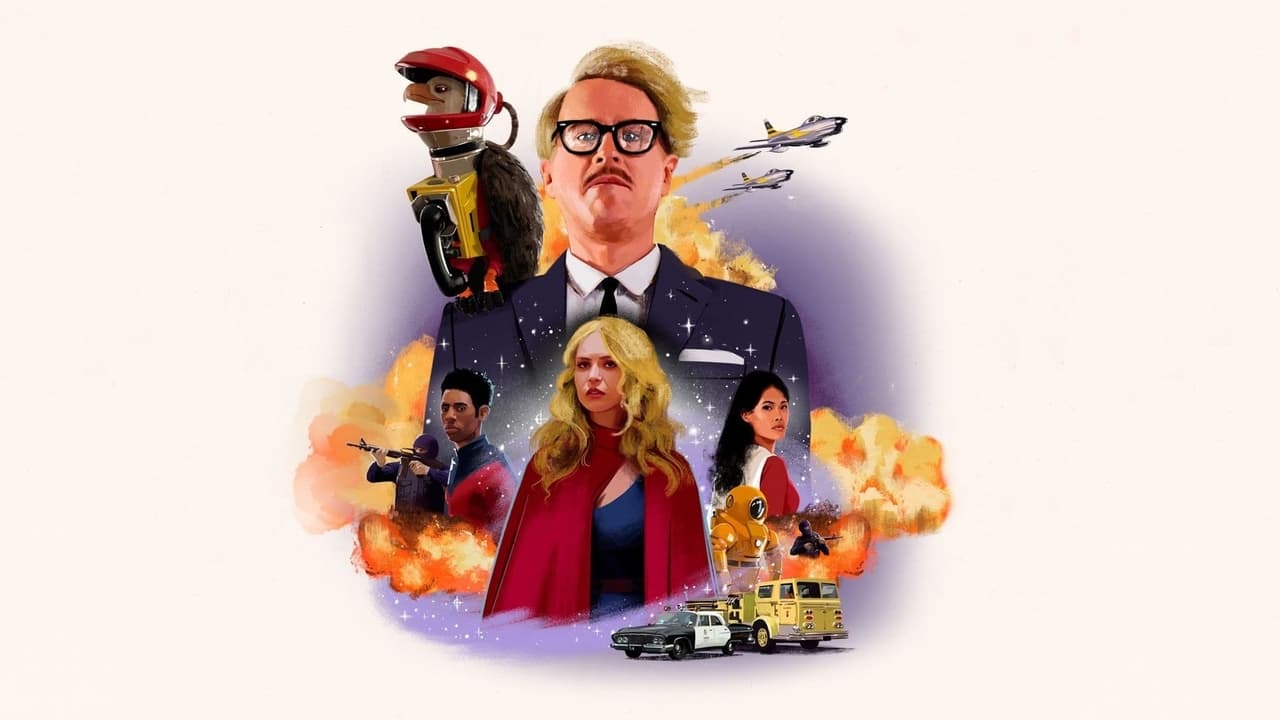
"The Hyperions" is a compelling narrative that begins in 1960 with Professor Ruckus Mandulbaum, who invents the Titan badge—a device granting humans distinct superpowers. He mentors three disadvantaged youths, forming an unconventional superhero family that quickly gains fame and prestige. However, internal tensions and commercial pressures cause the original team to fracture, prompting Mandulbaum to replace them with a new group of superpowered teens. The story fast-forwards to 1979, focusing on two grown members of the original team who, desperate to reclaim their Titan badges, resort to robbing the professor's museum, inadvertently taking hostages in the process.
At its core, "The Hyperions" explores themes of family, identity, and the commodification of heroism. It scrutinizes the impact of fame and commercial interests on personal relationships, highlighting how success can lead to fragmentation within even the strongest bonds. The narrative also challenges traditional superhero tropes by portraying heroes who grapple with real-world issues like aging, displacement, and reclaiming agency over their own powers. This introspective approach invites audiences to consider the human side of superhero mythology beyond mere spectacle.
Since its release, "The Hyperions" has resonated strongly with audiences and critics alike, praised for its mature storytelling and nuanced character development. It has influenced pop culture by inspiring a wave of superhero stories that emphasize character complexity and moral ambiguity. The show's unique blend of nostalgia and contemporary themes has established it as a cult classic, sparking discussions about the evolution of the superhero genre and the meaning of power, legacy, and redemption in popular media.
Full Cast of The Hyperions

Cary Elwes

Penelope Mitchell

Elaine Tan

Alphonso McAuley

Tanner Buchanan
Sal Lopez

Andrew Patrick Ralston

Annie Korzen
Jan Munroe

Indi Star
Crew of The Hyperions
Full backstage crew list →- Released November 24, 2022