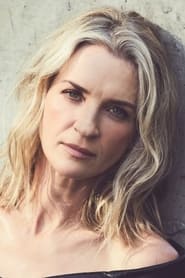
In the captivating series "The Handmaid's Tale," Elisabeth Moss delivers a powerful performance as June Osborne, also known as Offred or Ofjoseph. She is a woman who finds herself trapped in a dystopian future, where a fundamentalist theocratic dictatorship has taken control. This regime, known as the Republic of Gilead, has imposed a strict social hierarchy and rigid rules, particularly concerning women's roles and rights.
Yvonne Strahovski portrays Serena Joy Waterford, a complex character who is both a victim and a perpetrator of the oppressive system. As the wife of a high-ranking government official, she wields considerable power and influence. However, she is also bound by the same restrictive rules and expectations that subjugate all women in Gilead.
Based on Margaret Atwood's acclaimed novel, "The Handmaid's Tale" is a chilling exploration of a society that has traded freedom for order. The story follows June as she navigates the dangerous world of Gilead, where she is forced to serve as a handmaid - a concubine for the ruling class. The series is a gripping tale of survival, resistance, and the indomitable human spirit, making it a must-watch for fans of dystopian dramas.
Elisabeth Moss delivers a tour de force performance as June Osborne, also known as Offred and Ofjoseph, in the dystopian series "The Handmaid's Tale." Her portrayal is a complex tapestry of fear, resilience, and defiance, capturing the essence of a woman stripped of her rights and freedom in the oppressive theocracy of Gilead. Moss's ability to convey a wide range of emotions with subtlety and nuance is nothing short of mesmerizing; her eyes often speak volumes, revealing the depths of June's trauma and her unyielding spirit. Through her performance, Moss brings to life the profound internal struggle of a woman caught between submitting to her oppressors and fighting for her autonomy. She navigates the character's transformation from a subjugated handmaid to a rebellious leader with a raw intensity that is both harrowing and inspiring. Moss's portrayal anchors the series, serving as a powerful reminder of the resilience of the human spirit in the face of tyranny.
Yvonne Strahovski delivers a compelling and nuanced performance as Serena Joy Waterford in the television adaptation of Margaret Atwood's "The Handmaid's Tale." Initially presented as a cold and formidable antagonist, the wife of a powerful commander in the oppressive regime of Gilead, Strahovski's portrayal gradually unveils the complex layers of Serena's character. With a balance of steely resolve and vulnerability, she captures the internal conflict of a woman who is both a victim and a perpetrator of the dystopian society's harsh ideologies. Strahovski's performance is particularly poignant as she navigates Serena's evolving relationship with the protagonist, Offred, showcasing the character's capacity for both cruelty and empathy. Her ability to convey Serena's unspoken emotions through subtle shifts in expression and posture adds depth to the character, making her one of the most intriguing and multi-dimensional figures in the series. Strahovski's work earned her critical acclaim, including Emmy nominations, as she brought to life the complex emotional journey of a woman grappling with her role in a oppressive world, her desires for motherhood, and her nascent sense of rebellion against the very system she helped to create.
Joseph Fiennes delivers a chilling and nuanced performance as Commander Fred Waterford in the television adaptation of Margaret Atwood's dystopian novel, "The Handmaid's Tale." As the architect of Gilead's oppressive regime, Fiennes masterfully portrays the complex layers of Waterford's character, oscillating between the role of a charismatic leader and that of a menacing authoritarian. His ability to convey a sense of calculated manipulation, underpinned by a veneer of civility, makes his portrayal particularly unsettling. Fiennes brings depth to the character, revealing glimpses of vulnerability and a twisted sense of entitlement that stems from his position of power. His interactions with Elisabeth Moss's character, Offred, are laden with tension, highlighting the power dynamics and the psychological warfare inherent in their relationship. Fiennes's performance is a standout element of the series, as he encapsulates the insidious nature of complicity and the banality of evil that defines his character's role in the oppressive societal structure of Gilead.
Ann Dowd delivers a powerhouse performance as Aunt Lydia in the television adaptation of Margaret Atwood's dystopian novel "The Handmaid's Tale." As the stern and unyielding enforcer of the oppressive regime of Gilead, Dowd's portrayal of Aunt Lydia—also known as Miss Clements—is a complex amalgamation of cruelty and twisted maternal instinct. With a commanding presence, Dowd brings depth to a character that could have easily been one-dimensional, imbuing Aunt Lydia with a chilling sense of authority as she indoctrinates and disciplines the Handmaids with an unsettling blend of scripture and sadism. Her ability to convey the character's own tragic history and her unwavering belief in the righteousness of her actions adds layers of complexity, making Aunt Lydia one of the most memorable and haunting figures in the series. Dowd's performance is a masterclass in nuance, as she navigates the character's brutal exterior while subtly revealing the fractured vulnerability that lies beneath, earning critical acclaim and an Emmy Award for her outstanding supporting role.
Madeline Brewer's portrayal of Janine Lindo, known variously as Ofwarren, Ofdaniel, and Ofhoward, in the television series "The Handmaid's Tale" is a riveting embodiment of complexity and resilience. Brewer brings a raw vulnerability to the character, whose journey from a defiant and outspoken young woman to a broken and obedient Handmaid is both heart-wrenching and inspiring. Her performance is marked by an intense emotional range, seamlessly transitioning from moments of jarring defiance to deep despair, capturing the essence of a woman struggling to maintain her identity in a brutally oppressive society. Brewer's Janine is a symbol of the indomitable human spirit, as she oscillates between compliance and rebellion, showcasing the character's multifaceted nature. Her ability to convey the depth of Janine's trauma, faith, and tenacity has garnered critical acclaim, making her one of the standout characters in the series and solidifying Brewer's reputation as a formidable actress capable of navigating the intricate psychological landscape of her roles.
Max Minghella delivers a nuanced and compelling performance as Nick Blaine in the television adaptation of Margaret Atwood's dystopian novel, "The Handmaid's Tale." As Nick, Minghella embodies the complexities of a man caught in the oppressive regime of Gilead, where his role as a driver and later as an Eye (a member of Gilead's secret police) places him in a precarious position of power and vulnerability. Minghella's portrayal is characterized by his ability to convey the internal struggle of a character who is both a participant in and a victim of the oppressive social order. His interactions with the protagonist, Offred (played by Elisabeth Moss), are fraught with tension and ambiguity, as their clandestine relationship develops under the ever-watchful eyes of Gilead's authorities. Minghella's performance is marked by a quiet intensity and an understated charisma that captures the audience's empathy, even as Nick's motivations and loyalties remain enigmatic. Through subtle shifts in expression and a measured physicality, Minghella reveals the depth of Nick's moral conflict and his yearning for a life unshackled by the constraints of his role in Gilead's dystopian society, making his character one of the most intriguing and multifaceted figures in the series.