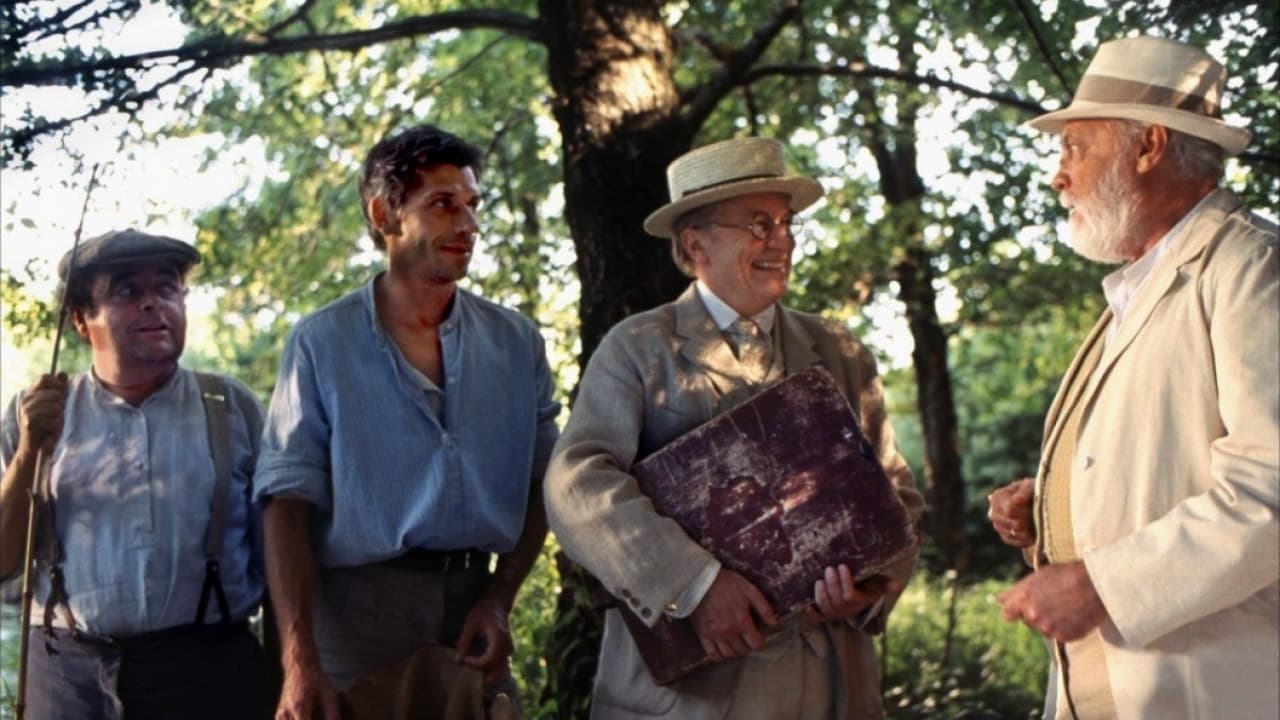
"The Children of the Marshland" unfolds in 1918, in the serene region of Marais along the Loire River. The film centers on Henri Pignol, known as Riton, who grapples with a cantankerous wife and three boisterous children. His friend Garriss, haunted by memories from World War I trenches, lives a solitary life. Their days weave through seasonal labor punctuated by visits from their colorful friends: Tane, the train conductor, and Amédée, an imaginative dreamer passionate about classic literature.
At its core, the film delves into themes of resilience, camaraderie, and the pursuit of normalcy amidst hardship. The contrast between Riton's chaotic family life and Garriss's wartime memories underscores the enduring impact of conflict on personal identities. Meanwhile, the characters' reliance on friendship and shared experiences highlights the human need for connection and hope during uncertain times. "The Children of the Marshland" paints a tender portrait of rural life coping with the shadows of the past.
Upon release, the film was lauded for its poignant storytelling and authentic portrayal of post-war rural France. Jacques Villeret's warm yet nuanced depiction of Riton, alongside Jacques Gamblin's evocative performance as Garriss, earned critical acclaim. Although not a mainstream blockbuster, the film holds a cherished place in French cinema, inspiring subsequent works exploring the interplay between history and everyday life. Its impact resonates among audiences seeking heartfelt narratives about resilience and friendship.
Main Cast of The Children of the Marshland
Jacques Villeret

Jacques Gamblin

André Dussollier

Michel Serrault
Crew of The Children of the Marshland
Full backstage crew list →- Released March 03, 1999