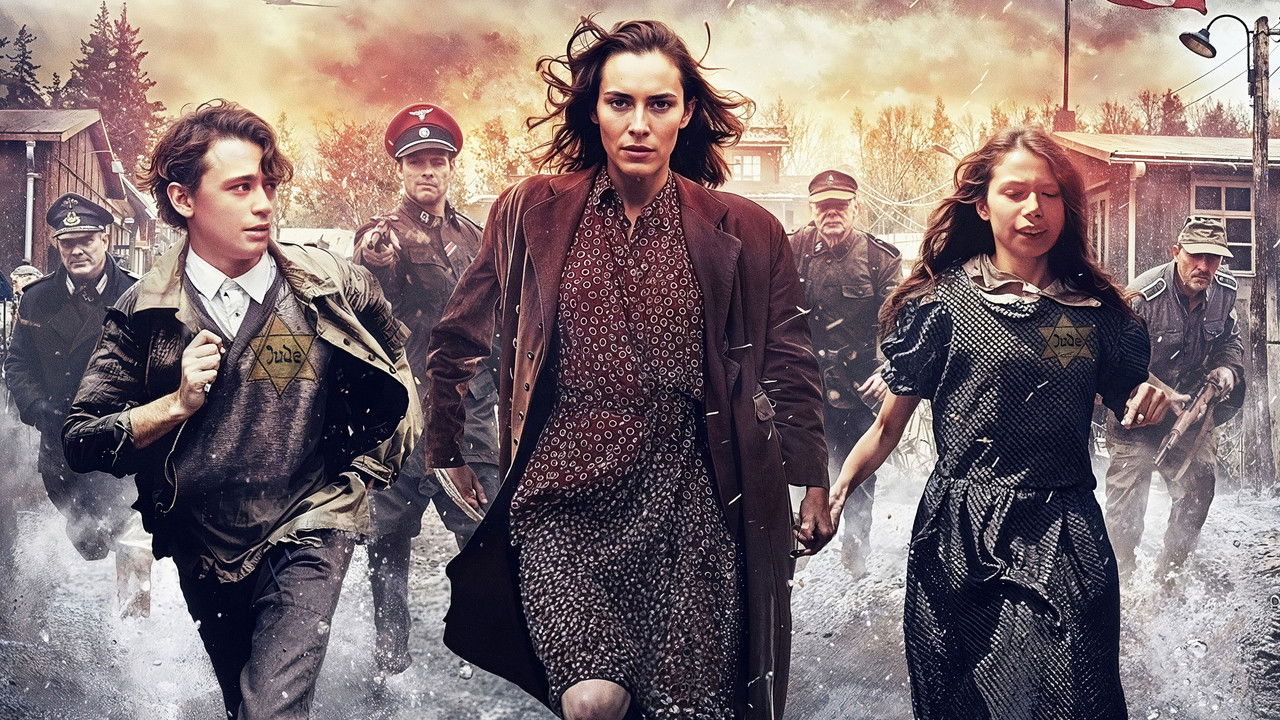
"The Aryan Papers" is a harrowing tale set in Stuttgart in 1942, amidst the oppressive and brutal Nazi regime. The story follows two German-born Jewish children who, after tragically losing their family to Nazi persecution, embark on a perilous journey to escape the relentless hunt. Their guardian, Gisella, is intricately connected to the Nazis' Lebensborn program, designed to promote the so-called 'Master Race,' making their flight not only a physical struggle but a psychological battle through a world steeped in ideological terror.
Central to the film are themes of survival, identity, and the loss of innocence in the face of unimaginable atrocities. It sheds light on the irony of Gisella's role—a woman tied to the Nazi program—acting as a protector to children her regime seeks to destroy, thereby exploring the complexities of morality amidst war. The narrative deeply examines the personal ramifications of systemic hatred and the resilience of the human spirit amid the darkest chapters of history.
Though "The Aryan Papers" faced a complicated production history, including its eventual cancellation, its story continues to resonate in discussions about Holocaust cinema and the portrayal of war's impact on children. The film, conceptualized by renowned director Roman Polanski, remains a poignant reminder of cinema's power to confront painful truths and preserve memory. Its legacy endures in pop culture as a testament to storytelling that challenges audiences to reflect on humanity, evil, and hope.
Full Cast of The Aryan Papers

Leona Clarke

Richard Hawley

Alex Reece
Grayson James Matthews
Celia Learmonth

Lauren Staerck

Moses Gomes-Santos
Cara Chase
Matthew Hendrickson
Jade Morris
Crew of The Aryan Papers
Full backstage crew list →- Released January 26, 2026