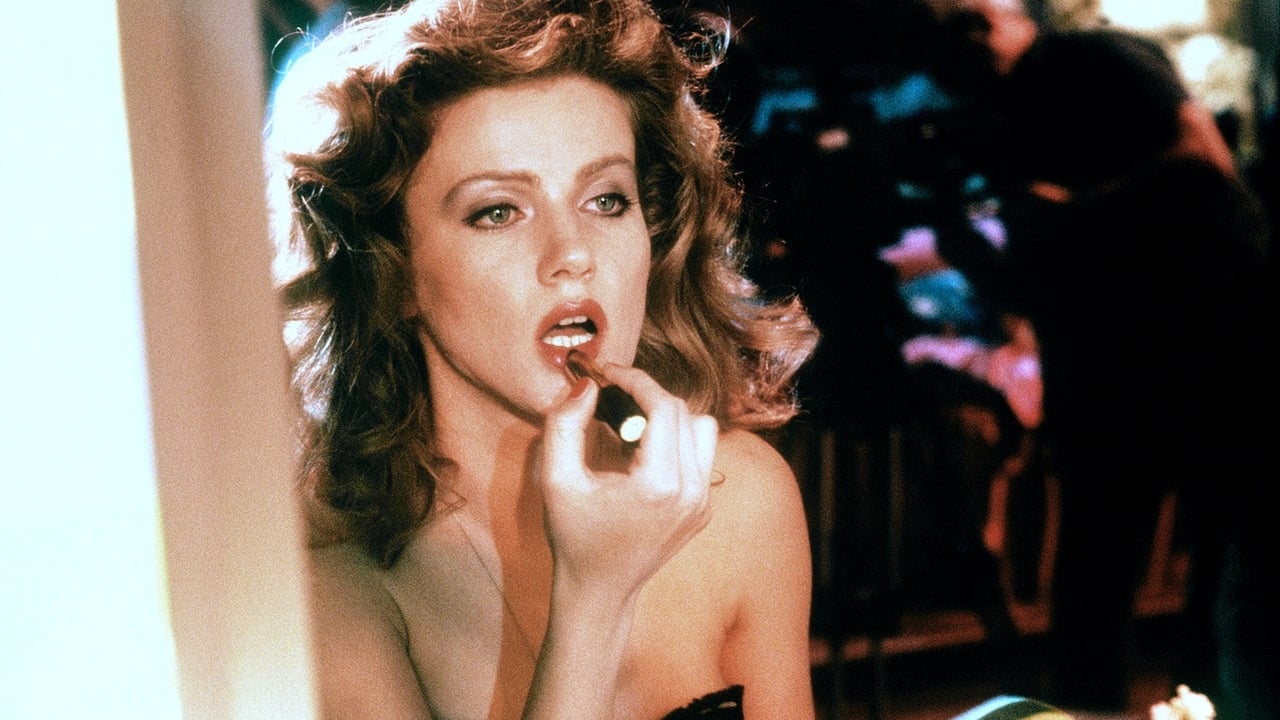
"Lola" unfolds in Germany during the autumn of 1957, centering on the eponymous Lola, a captivating cabaret singer and prostitute who revels in her ability to enchant men. Despite her allure and control, Lola yearns for a better life—one filled with financial security, property ownership, and genuine love. To achieve this, she masterfully manipulates the clash between a corrupt building contractor and a newly appointed, morally upright building commissioner, crafting a daring scheme to rise above the transactional world she inhabits. The film is visually distinguished by its playful, candy-colored palette and serves as a loving nod to Josef von Sternberg's classic, "The Blue Angel."
At its core, "Lola" explores themes of power dynamics, capitalism, and societal ambition. Fassbinder employs satire to critique a post-war German society where ethics are compromised, and the commodification of people and ideals is the norm. Lola herself embodies the struggle for autonomy within a system that thrives on corruption and exploitation. The film interrogates the cost of survival and success, highlighting the blurred lines between manipulation and agency in a culturally and economically turbulent era.
Upon release, "Lola" received acclaim for its stylistic boldness and incisive social commentary. Fassbinder's distinctive use of vibrant colors and theatrical storytelling redefined cinematic approaches to drama and satire, influencing subsequent filmmakers. The movie holds a significant place in pop culture as a sharp reflection on capitalism and gender roles, maintaining its relevance through ongoing discussions about power, identity, and societal values in both historical and contemporary contexts.
Full Cast of Lola
Udo Kier

Mario Adorf
Barbara Sukowa
Crew of Lola
Full backstage crew list →- Released August 20, 1981