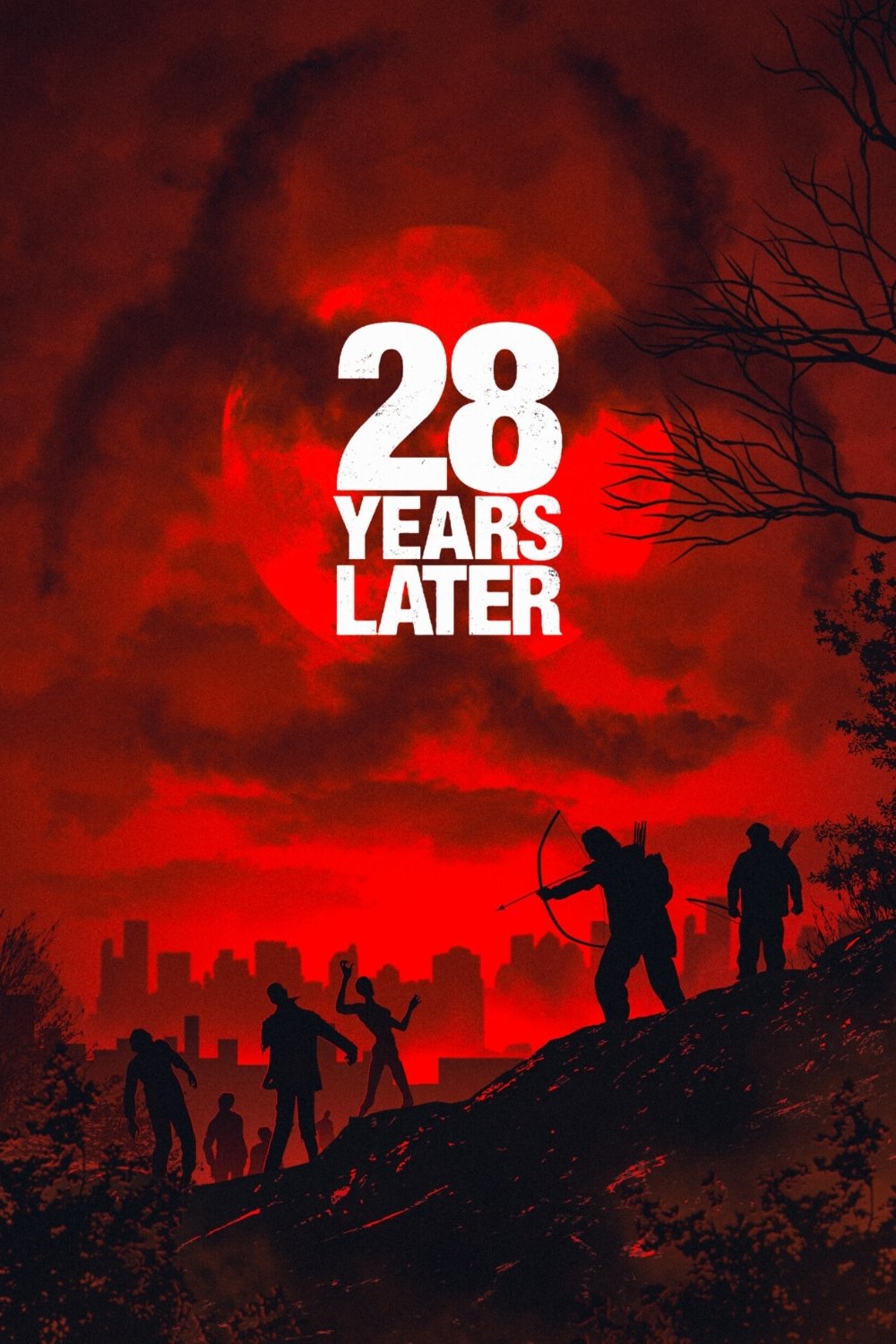

In 28 giorni si è manifestato. In 28 settimane si è diffuso. In 28 anni si è evoluto.
Sono passati quasi tre decenni da quando il virus della rabbia è fuoriuscito da un laboratorio di armi biologiche e ora, ancora in una quarantena forzata e brutale, alcuni sono riusciti a sopravvivere in mezzo agli infetti. Un gruppo di sopravvissuti vive su una piccola isola collegata alla terraferma da un'unica strada rialzata ed estremamente protetta. Quando uno di questi lascia l'isola per una missione diretta nel profondo della terraferma, scoprirà segreti, meraviglie e orrori che hanno mutato non solo gli infetti ma anche gli altri sopravvissuti.
Critics' Reviews
90
Danny Boyle’s “28 Years Later,” a zombified IP, returns the director to the gory terrain he first forged with the grungy “28 Days Later.” It also sees him reteaming with Alex Garland, who after launching a successful directorial career (“Annihilation”) is back penning a franchise he authored as screenwriter for “28 Days Later.” That’s nearly where the nostalgia ends. Because whatever you think the third edition in this trilogy could be, Boyle and Garland gleefully subvert it. Instead, “28 Years Later,” an at times tonally daring and whimsically transportive coming-of-age zombie film, does the exact opposite of what you expect. Though this horror flick anticipates the coming of the Nia DaCosta helmed sequel “28 Years Later: The Bone Temple,” it refreshingly doesn’t operate by the logic of franchise building. It’s a gnarly piece of gruesome art.
80
Boyle and Garland have much on their minds. 28 Years Later brims with thematic resonances, a canvas on which to illustrate a national identity-crisis. There is a clear Brexit analogy in a country experiencing isolationism — the rage-ravaged Britain secluded from the world; its people secluded from their own land. The distinctly British post-apocalyptic society is part Blitz-spirit wartime-rationing aesthetic, part medieval fortress — Boyle repeatedly cuts to black-and-white World War footage. Is this the nebulous ‘good old days’ that some Brits yearned for? Is survival inherently regressive? Years is also about the stories we tell ourselves, the myth-building that creates a nation, a fiction rather than truth.
38
I struggle with films that open with a priest kneeling between pews accepting the cannibalism of his zombie congregation while his little boy in hiding asks why “Da” has forsaken him. I get it. I got it. I’ve gotten the evangelical Christian aspect of zombies-as-metaphor since I saw Night of the Living Dead as a steadfastly average middle-American child, for Christ’s sake. (Literally.) There’s no point too subtle for Boyle, the poor man’s Ridley Scott (who was already the poor man’s Smart Filmmaker), to bloat into obscenity. He did, after all, give us Millions, which plays more as a prequel to this film than 28 Days Later does, come to think of it. Consider Swedish soldier Erik (Edvin Ryding), who serves no function as a human being but fulfils several functions as a symbol. He says he wanted to be thought of as a “man,” so he joined the Navy and promptly shipwrecked on Scotland. Then he says the hyper-macho “Alpha” zombies of 28 Years Later are like “stock brokers, fuckin’ Wall Street guys.” Get it? Zombies not only represent the insidious creep of prosperity gospel Christians but also represent the insidious creep of…prosperity…gospel, um, Christians.
- Pubblicato June 18, 2025