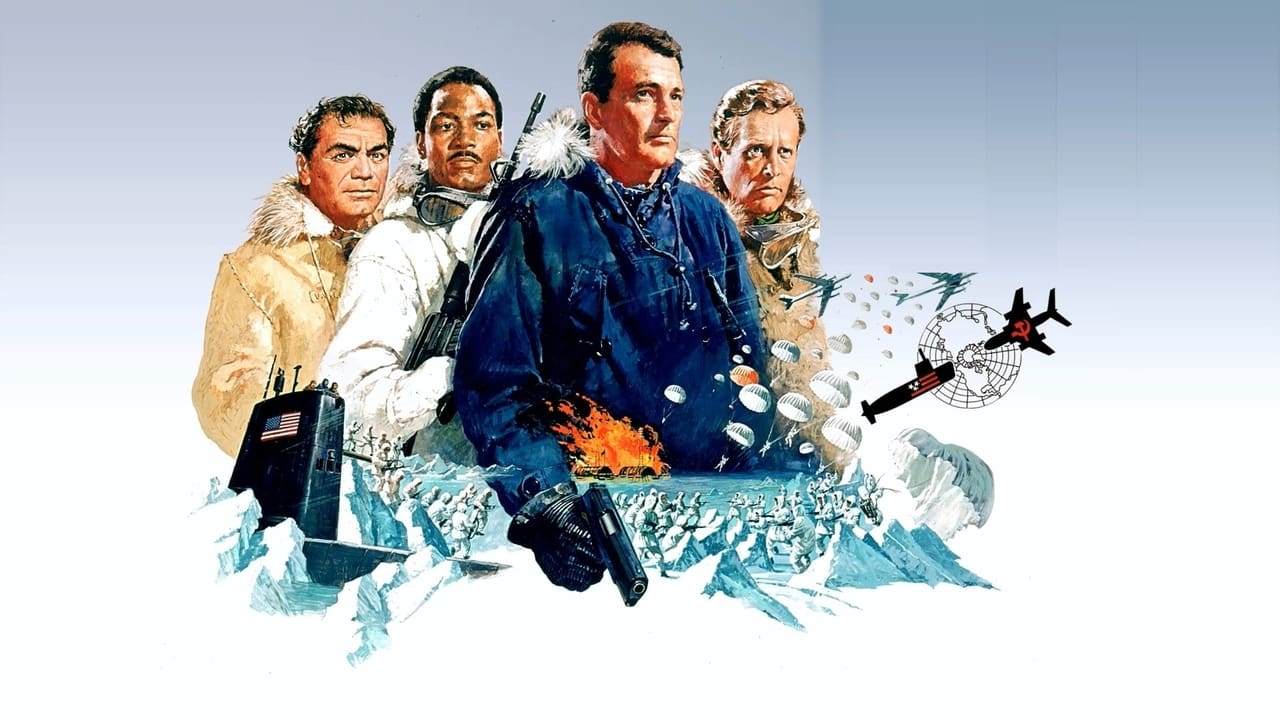
"Ice Station Zebra" unfolds with a gripping premise centered around a top-secret Soviet spy satellite containing stolen Western technology that malfunctions and crashes near a remote British Arctic research station named Ice Station Zebra. The station sends a distress signal before going silent, prompting the atomic submarine Tigerfish, under the command of Cmdr. James Ferraday (Rock Hudson), to embark on a perilous rescue mission. The narrative weaves tension and intrigue as the crew encounters both environmental hazards and geopolitical threats during their endeavor.
The film delves into key themes such as Cold War paranoia, the dangers of espionage, and human resilience under extreme conditions. It explores the fragility of technological advancements when embroiled in international rivalry, highlighting the precarious balance of power during the era. Additionally, the stark Arctic setting underscores themes of isolation and survival, while the interpersonal dynamics among characters like Ferraday and Boris Vaslov (Ernest Borgnine) reflect the complex loyalties and moral ambiguities faced by those caught in the tensions of the Cold War.
Upon release, "Ice Station Zebra" was noted for its intense atmosphere, strong performances, and meticulous attention to detail, particularly in depicting submarine operations and Arctic expeditions. While it garnered mixed critical reviews, its blend of espionage thriller and adventure secured it a place in Cold War cinema. Over time, the film has maintained cultural significance as a reflection of 1960s geopolitical anxieties and has influenced subsequent portrayals of submarine warfare and spy narratives within popular media.
Main Cast of Ice Station Zebra

Rock Hudson

Ernest Borgnine

Patrick McGoohan
Jim Brown
Crew of Ice Station Zebra
Full backstage crew list →- Released April 04, 1968